Hernia means weakness or hole in the abdominal muscular
What is a Hernia?
hernia occurs when an internal organ or tissue pushes through a weak area in the surrounding muscle or tissue. It may cause a visible bulge, pain, or discomfort. Treatment depends on the type and severity of the hernia, and surgery may be recommended to repair the weakness.
Types
Inguinal hernia: a bulge in the groin that may reach the scrotum (more common in men)
Femoral hernia: a bulge below the groin (more common in women)
Umbilical hernia: is hernia at belly button
Incisional hernia: a bulging through the scar of previous abdominal surgery / operation
Hiatal or Hiatus hernia: an opening in the diaphragm through which the stomach protrudes into the chest cavity
Causes
Ageing
Overweight or obese
Long-term constipation
Long-term cough
Physical exertion - Lifting heavy items
Straining to urinate - Enlarged prostate
Poor nutrition
Smoking
Conditions leading to abdominal distention – e.g.Ascites
Symptoms
Swelling – painless / painful
Nausea and / or vomiting – in case of obstructed hernia / hiatal hernia
Heartburn – in case of Hiatus hernia
Tests to Diagnosis
Clinical examination
Sonography
CT Scan
Barium study, Endoscopy- for Hiatal Hernia
Complications
Hernias can cause an emergency need for surgery when a part of the intestine gets blocked leading to compromised blood supply
This can cause life threating complication
Treatment
Surgery / Operation – Laparoscopy / Open - with / without mesh -“jali” repair
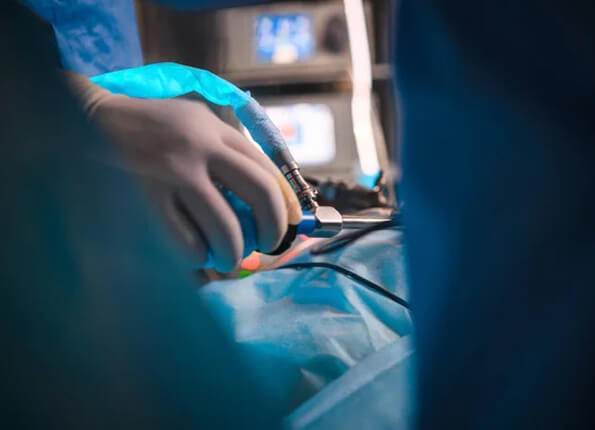
Laparoscopic Hernia repair surgery is favourable option for patients – as laparoscopy method is having advantage of lesser scars, minimal pain, early discharge, early come back to daily life & lesser wound complication
Open surgery is offered to the patients who are unfit to go under general anaesthesia or in complicated scenario
Just a Call Away We'd love to hear from you!
We are here and always ready to help you. Let us know how we serve you and we’ll get back within no time.